
7 Signs of Low Testosterone
If you've been feeling more tired than usual, noticing your motivation slipping, or wondering why the gym results just aren't showing up anymore, you're not imagining it — and you're not alone. Low testosterone is one of the most under-diagnosed conditions in men over 30, and it's far more common than most people realize.
At New Life Men's Clinic in West Hollywood, we see men every week who assumed their symptoms were "just stress" or "just getting older" — only to find out a simple blood panel told a very different story. Here's what to watch for, and what you can actually do about it.
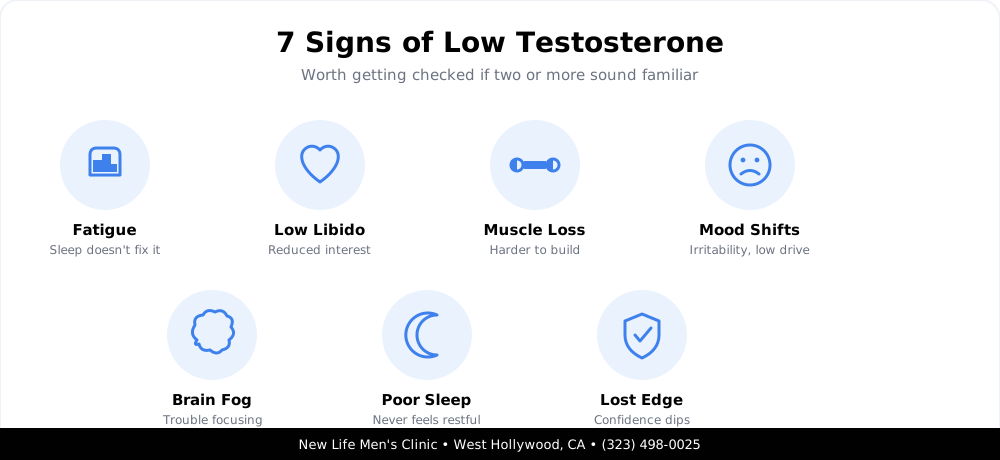
Quick summary — the 7 signs at a glance:
- Persistent fatigue that sleep doesn't fix
- Reduced sex drive
- Difficulty building or maintaining muscle
- Mood changes — irritability, low motivation, flat mood
- Brain fog or trouble concentrating
- Sleep disruption
- Loss of confidence or physical edge
1. Persistent Fatigue That Sleep Doesn't Fix
Everyone has tired days. Low testosterone fatigue is different — it's a heavy, full-body exhaustion that doesn't improve no matter how much you sleep. If you're waking up already drained, that's a signal worth paying attention to.
2. Reduced Sex Drive
Testosterone plays a central role in libido. A noticeable, sustained drop in sexual interest — not just an occasional off week — is one of the most common reasons men come in for testing.
3. Difficulty Building or Maintaining Muscle
If your workouts haven't changed but your results have — less muscle, more stubborn fat, especially around the midsection — hormone levels are often part of the picture, not just diet or training.
4. Mood Changes: Irritability, Low Motivation, or Flat Mood
Testosterone influences more than the physical. Many men describe a subtle but real shift: shorter patience, less drive at work, or a general sense of "flatness" that wasn't there a few years ago.
5. Brain Fog or Trouble Concentrating
Struggling to focus, forgetting small things, or feeling mentally "slower" than you used to can be tied to hormonal shifts — not just a busy schedule.
6. Sleep Disruption
Poor sleep quality and low testosterone often feed each other. Waking up frequently, or never quite feeling rested, is a symptom worth flagging to a provider.
7. Loss of Confidence or Physical Edge
This one is harder to put into words, but the men we see describe it consistently: a sense that they've lost a step — physically, mentally, or both.
Why These Symptoms Get Missed
Because these signs develop gradually, it's easy to explain each one away individually. Taken together, though, they often point to the same root cause. The only way to know for sure is lab testing and a clinical evaluation — guessing (or self-treating) isn't a substitute for an actual evaluation.
What Testing and Treatment Actually Look Like
At New Life Men's Clinic, the process starts with a complete blood panel and a real conversation about your symptoms and health history. If testosterone replacement therapy is appropriate for you, treatment is physician-supervised from day one — injections are administered in-clinic by trained medical professionals, and your plan is adjusted based on your labs and how you're responding, not a one-size-fits-all protocol.
Serving Men Throughout West Hollywood and Los Angeles
We're located at 7820 Santa Monica Blvd in West Hollywood, convenient to Beverly Hills, Hollywood, and the greater Los Angeles area. Same-day blood work is available, and your initial visit goes toward your first treatment if you move forward with TRT.
If two or more of these symptoms sound familiar, it may be worth getting your levels checked. Call New Life Men's Clinic at (323) 498-0025 to schedule a TRT consultation.
This article is for educational purposes and is not a substitute for medical advice. Individual results vary, and TRT eligibility is determined through lab testing and clinical evaluation.